Blog post: Juliano Calixto • 12/08/2026
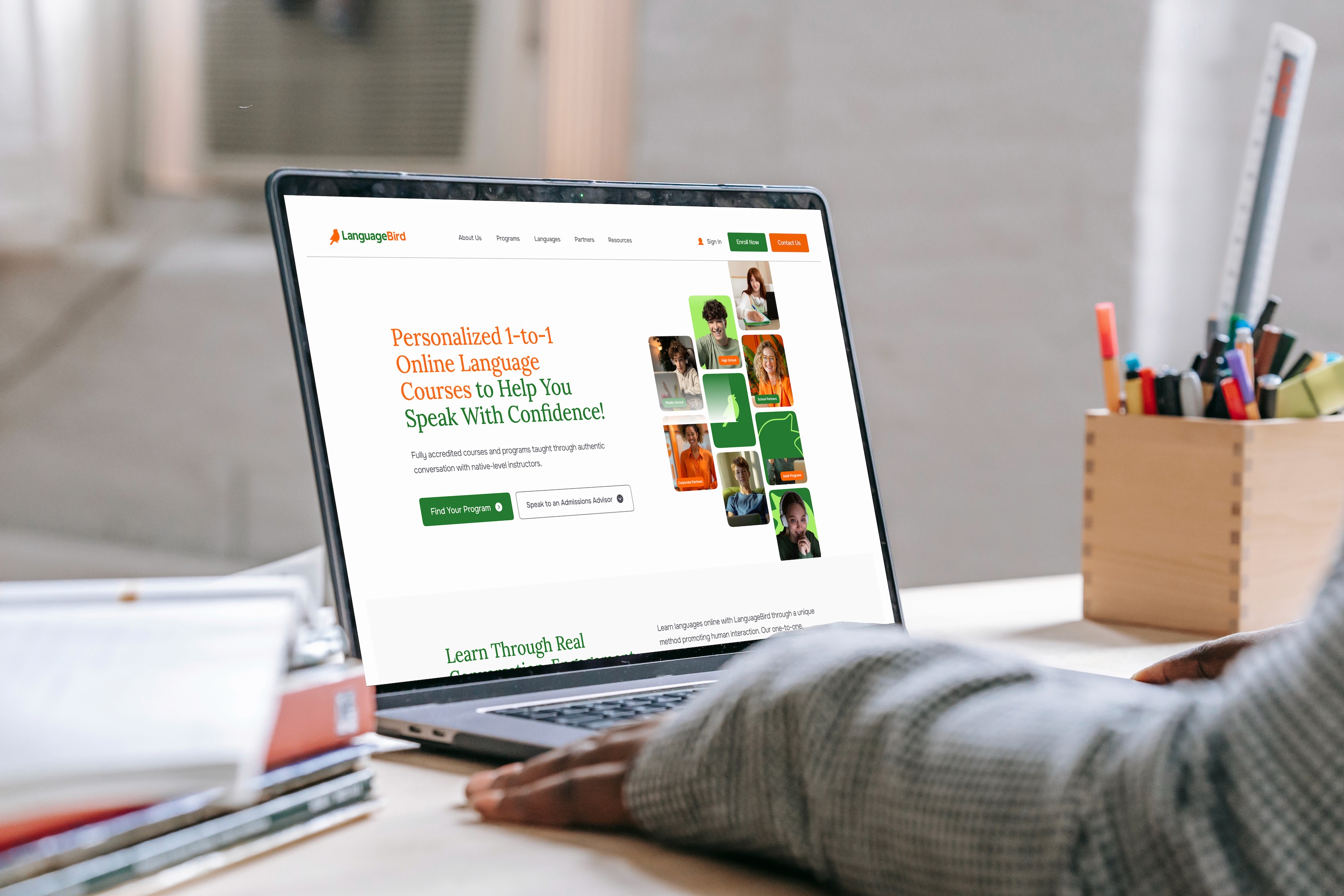
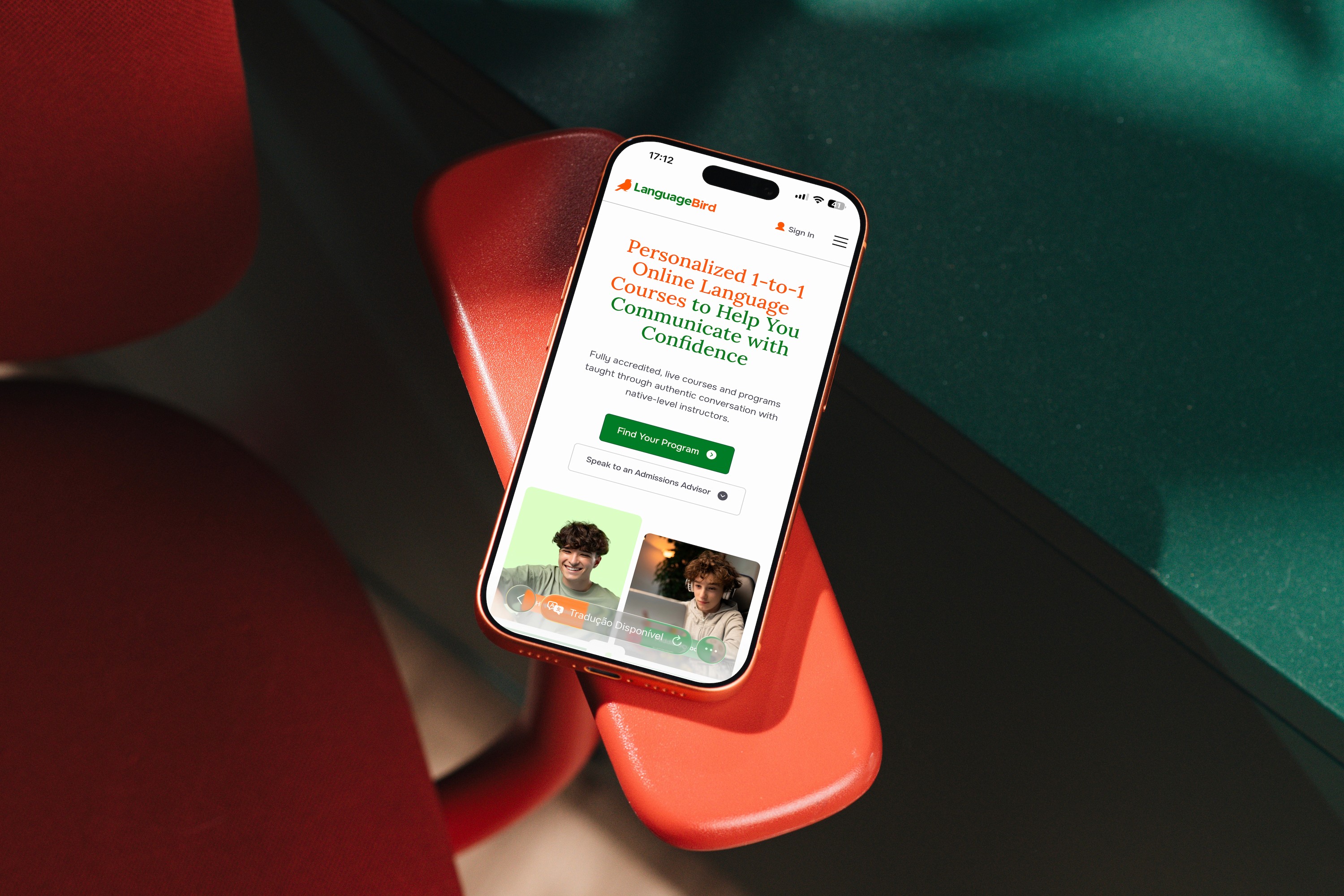
How LanguageBird turned a rebrand into a website that enrolls

How LanguageBird turned a rebrand into a website that enrolls

The ESL versus ESOL decision that could have cost them their traffic, 171 pages rebuilt, and a funnel that hit year on year parity two months ahead of forecast.bvb

The ESL versus ESOL decision that could have cost them their traffic, 171 pages rebuilt, and a funnel that hit year on year parity two months ahead of forecast.bvb

Every rebrand carries the same hidden bill. You change what you call yourself, the website follows, and three months later the traffic that took years to build is gone. Nobody plans for it. The words changed, the search engines noticed, and the rankings quietly moved somewhere else. LanguageBird went through a rebrand and came out with more enrollments, not fewer. The decision that made the difference took about twenty minutes to make and is worth the whole article.

An online school where the buyer is a family

LanguageBird is an accredited online language school in the United States. Live, one to one instruction, a catalog running from Spanish and French to Mandarin, Korean and American Sign Language. The buyers are families. They research, compare, talk it over at dinner, and come back weeks later. Our own attribution work later put a number on that patience: leads convert on average 4.7 months after they first arrive. Keep that in mind, because it explains why a rebrand's damage usually shows up long after anyone is still watching for it.

The trap: the words your brand wants versus the words your market types

The rebrand raised a question that sounds academic and isn't. The school's positioning called for ESOL, English for Speakers of Other Languages, the term the education world has been moving toward for years. The problem is that families don't type ESOL into Google. They type ESL. This is where most rebrands go wrong. The brand team wins the argument, every page gets rewritten in the new vocabulary, and the site quietly disappears from the searches that were bringing in students. The market didn't rebrand. Only you did.

The hybrid call

We split the difference along the line that actually matters, which is the line between what humans read and what search engines index for ranking. ESOL went into the visible copy: headlines, body text, the language a parent reads and the language the brand wanted to own. ESL stayed frozen where the equity lives: URL slugs and title tags, untouched. The result is a site that speaks the brand's language to people while keeping the search footprint it spent years earning. No redirect chains, no ranking reset, no six month recovery. A rebrand that reads as a rebrand and behaves, technically, like continuity.

Every rebrand carries the same hidden bill. You change what you call yourself, the website follows, and three months later the traffic that took years to build is gone. Nobody plans for it. The words changed, the search engines noticed, and the rankings quietly moved somewhere else. LanguageBird went through a rebrand and came out with more enrollments, not fewer. The decision that made the difference took about twenty minutes to make and is worth the whole article.

An online school where the buyer is a family

LanguageBird is an accredited online language school in the United States. Live, one to one instruction, a catalog running from Spanish and French to Mandarin, Korean and American Sign Language. The buyers are families. They research, compare, talk it over at dinner, and come back weeks later. Our own attribution work later put a number on that patience: leads convert on average 4.7 months after they first arrive. Keep that in mind, because it explains why a rebrand's damage usually shows up long after anyone is still watching for it.

The trap: the words your brand wants versus the words your market types

The rebrand raised a question that sounds academic and isn't. The school's positioning called for ESOL, English for Speakers of Other Languages, the term the education world has been moving toward for years. The problem is that families don't type ESOL into Google. They type ESL. This is where most rebrands go wrong. The brand team wins the argument, every page gets rewritten in the new vocabulary, and the site quietly disappears from the searches that were bringing in students. The market didn't rebrand. Only you did.

The hybrid call

We split the difference along the line that actually matters, which is the line between what humans read and what search engines index for ranking. ESOL went into the visible copy: headlines, body text, the language a parent reads and the language the brand wanted to own. ESL stayed frozen where the equity lives: URL slugs and title tags, untouched. The result is a site that speaks the brand's language to people while keeping the search footprint it spent years earning. No redirect chains, no ranking reset, no six month recovery. A rebrand that reads as a rebrand and behaves, technically, like continuity.

Then the part everyone underestimates: the content

A repositioned site with thin pages is still a thin site. The rebuild covered 171 pages, and on top of it we produced a batch of 20 articles totaling 32,653 words, written for a second audience that didn't exist the last time this school touched its website: the AI engines.

That means structuring content so a machine can lift a clean answer out of it. Direct questions with direct answers, specifics instead of adjectives, the kind of page that gets quoted rather than skimmed. 

Being cited by ChatGPT when a parent asks where to study a language is a different job from ranking third on a results page, and it needs different writing.

What the numbers did

The account today: 

402 leads from April to late July at USD 72 each
9.4% click through rate
8.1% conversion rate
4x ROAS, client reported.

A 9.4% CTR on search is the kind of number we double check before putting it in a report. It held. And in the July pulse, the funnel reached year on year parity two months ahead of the forecast we had set with the client, which for a school coming out of a rebrand is the opposite of what the textbook predicts.

There's a second scoreboard running alongside the first. We track LanguageBird's visibility across ChatGPT, Gemini and Perplexity, watching which pages the engines pick up when someone asks them where to learn a language. It doesn't replace performance data. It tells us what to feed next.

What we'd tell any school planning a rebrand

What we'd tell any school planning a rebrand

Decide early which words are brand and which words are traffic, and don't let one department own both decisions.


Freeze your equity in the places search engines weigh most, and let the new vocabulary live where humans read.


Then treat the content as part of the rebrand instead of a phase two that never gets funded, because a repositioned site with nothing to say ranks for nothing.


Most agencies would have run the rebrand as a design project and handed back a prettier site with a smaller funnel. The interesting work was the boring decision underneath.


We're running a free live session on August 26 about websites that inform, convert, and get cited by AI, with the real numbers behind rebuilds like this one.

Keep Reading

Keep Reading

Explore more insights, ideas, and perspectives from our latest articles.